
Graph Gatherings
In October 2023, GraphGeeks started around a simple, slightly stubborn idea: graph technology was growing fast, but the people trying to use it were isolated in silos.
Back then, most conversations about graphs were tied to a specific product. If you wanted to learn how to model interconnected data, you usually had to pick an approach (RDF or LPG?) – and likely a vendor – and then learn the related worldview. If you ran into a wall, you were largely left going between product pitches, fragmented documentation, and isolated forums.
Dennis Irorere and I (Amy Hodler) wanted to build a “third space” in the graph tech ecosystem. A place where practitioners could show up without pressure, ask messy questions, debate open standards, and figure out how to think in relationships together.
This past October marks three years since we took those first steps.
The Reality of the Human Gap
When we shared our Impact Report at the start of this year, we talked openly about what we call the Human Gap.
Even with graph technology expanding across enterprise data stacks, technical tooling has consistently outpaced graph literacy. The hardest hurdle for teams has never been installing an engine or running a basic query but learning how to think in relationships. It’s understanding how to translate messy, real-world networks into schemas and ontologies that make business sense, or knowing when a graph is actually the right tool for the job.
This year AI has made the need to deal with this human gap more urgent:
The AI reality check: With the rush into LLMs, teams quickly ran into the hard limits of pure vector search, adopting Graph RAG but then realizing that graph quality was essential but not automatic.
The agentic shift: As autonomous agents took center stage, knowledge graphs began serving as their foundational memory and stateful context layers.
Yet through all the hype cycles, our stance has remained steady: technology only works when the humans building with it actually understand it. That’s why we’ve focused on the fundamentals – mental models, architectural trade-offs between dedicated stores and embeddable engines, and vendor-neutral standards and guidelines.
What Community Actually Looks Like
You don’t build graph literacy through marketing slides. You build it through hands-on practice, honest conversations, and shared curiosity.
Looking across the past three years, the milestones that matter most aren’t just the numbers on our dashboards, they’re the everyday community moments:
The lively study groups: Whether someone is breaking down complex algorithms or digging into real-world networks in one of the study groups, members of GraphGeeks show up to learn from one another.
Building in the open: Through GraphGeeks Labs on GitHub, members have teamed up to build practical utilities like awesome-graph-universe and graphfaker, giving everyone lightweight ways to experiment and discover tools.
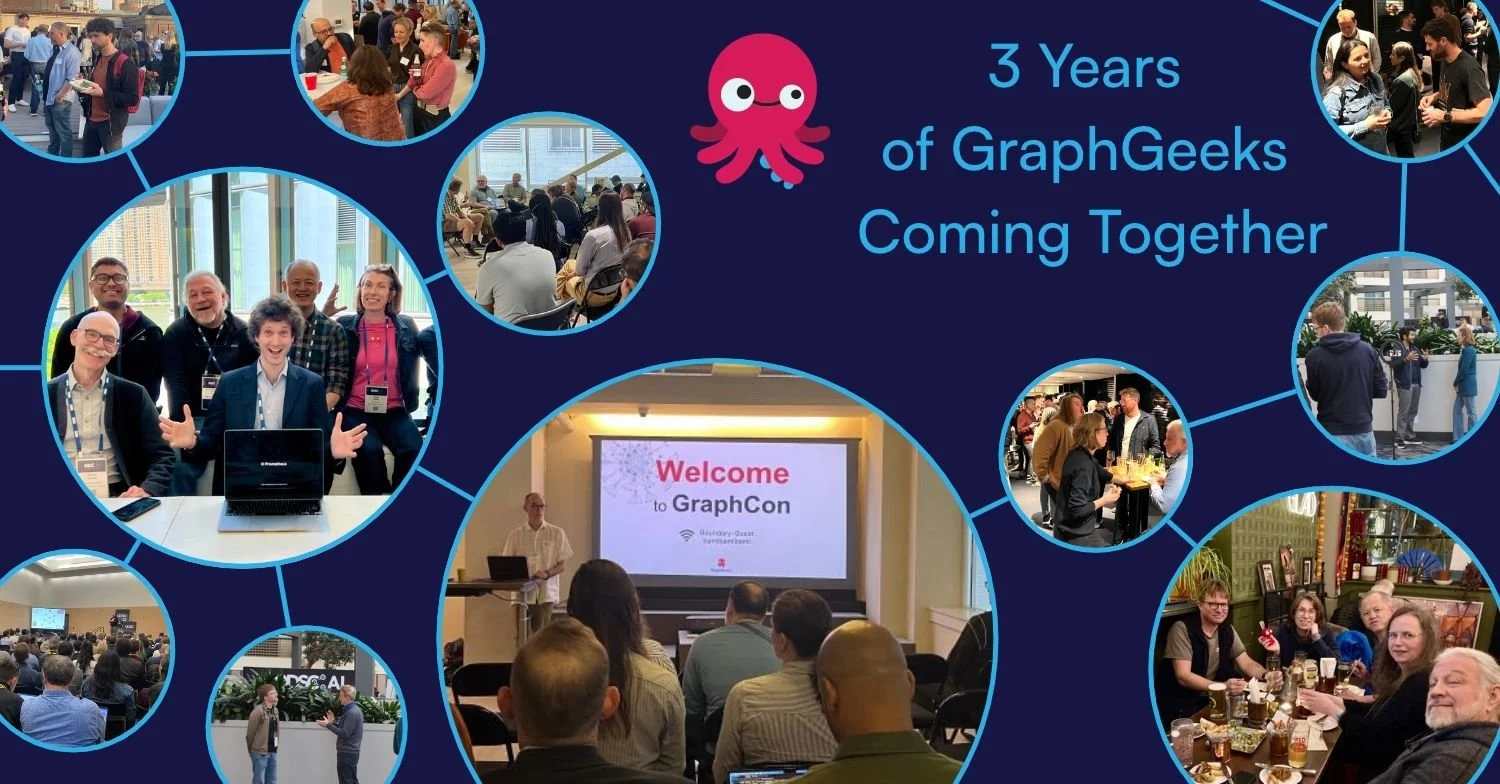
Real human connection: What began as digital chats on Discord have turned into standing-room-only mixers across North America and Europe. And our first-ever, in-person conference, GraphCon – a full day of graph talks that sold out. Seeing engineers, researchers, and newcomers packed into a room reminds us why this space matters.
Powered by Trust (& Incredible People)
GraphGeeks only works because our community is built on real relationships.
We are deeply grateful to our sponsors like Senzing, Neo4j, Google, AWS, Memgraph, gdotv, Ultipa, Rocketgraph, Graphwise, and Arango. Along with partners like the Graph Data Council, Connected Data London, Women in Data, Generationship, and Anisha Creatives. They actively support a vendor-neutral space and protect its independence, believing that a high-trust, low-noise environment makes the entire graph ecosystem healthier.
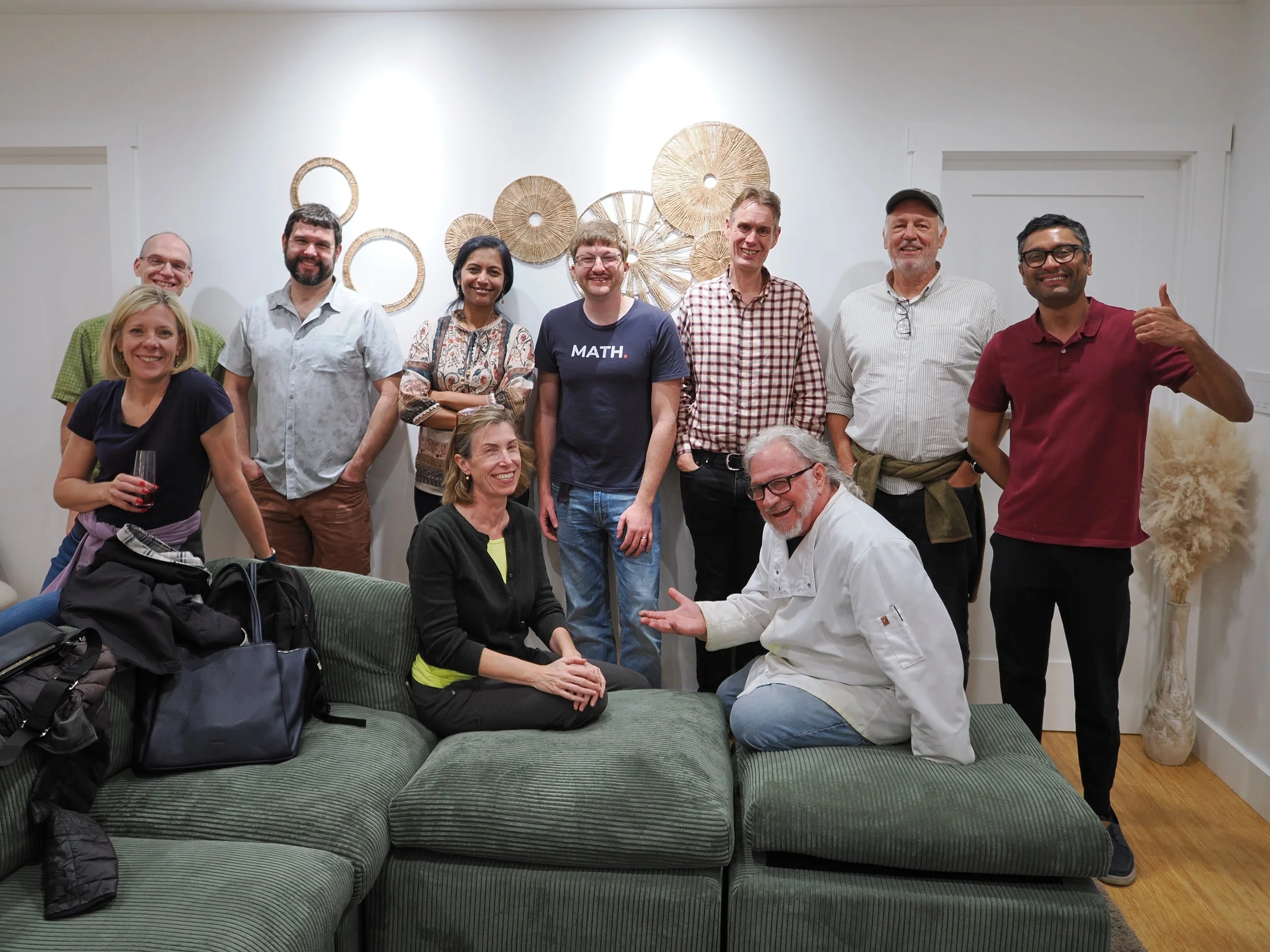
Most of all, we want to thank every volunteer, discussion lead, speaker, and community member who took time out of their week to answer a troubleshooting question, review a project, or welcome a newcomer. You make this place what it is.
Whether you’ve been hanging out with us since day one or are just dipping your toes into graph thinking, there’s an open seat for you here. Hop onto Discord, drop a pull request in GraphGeeks Labs, or join the newsletter to keep track. Let’s build what comes next together.
-Amy Hodler, proud founder of GraphGeeks
